

Welcome to ski school - a beginner’s guide to what to wear skiing
Heading on your first ski trip? This beginner’s guide breaks down exactly what to wear skiing, from base layers to ski jackets, so you stay warm, dry and comfortable on the slopes. Learn how to layer like a pro, what features to look for in your skiwear, and the essential kit to pack before you hit the mountains.
So, you’ve booked your first ski trip…
Exciting! The countdown has begun, and you’ve already googled the important questions - like how to ski without falling over! You can already picture it: snow on the mountains, fireside evenings, and a well-earned après pint after a day on the slopes.
That’s when the reality (and a little panic) hits - “What clothes do I need to ski?!” How many layers are enough? Do ski socks actually make a difference? And what even is a snow skirt? Don’t worry - we’ve got you.
Welcome to Ski School: your no-nonsense guide to getting kitted out for the slopes. If you’re wondering what clothes to wear skiing, this beginner’s guide has you covered. We’ll walk you through everything you need to stay warm, dry, and comfortable - and avoid the rookie mistakes that make your first ski trip a little chillier than it needs to be.
Master the layering system
Forget everything you know about winter coats. On the mountain, it's all about layers - three layers, in fact, that each do a specific job: wick, insulate, protect. These are what keep you warm when it’s freezing and cool when the sun comes out. Here’s what to wear under a ski jacket - and how each layer works.
Base layer - stay dry
This is the layer that sits against your skin, and it’s all about keeping sweat at bay. Skiing might look graceful, but it’s surprisingly sweaty work, even at -10°C. Once you get damp, you get cold fast.
For your base layer, stick to moisture-wicking fabrics like merino wool or technical synthetics, and avoid cotton, which traps moisture. Wondering how many base layers you’ll need for a week skiing? Pack 2-3 thermal tops and 2 pairs of thermal bottoms so you can rotate them. They dry quickly overnight and won’t take up half your suitcase.
Need a base layer? Shop men’s ski thermals or women’s ski thermals now.
Mid layer - lock in that toasty warmth
Your ski mid layer acts as your thermostat, and is made of either a fleece, a lightweight puffer, or an active insulated jacket. These are simple, breathable options that all trap heat without any bulk. We recommend choosing something you can unzip on sunny days and layer up when it’s bitter.
Outer layer - block wind and snow
Your outer layer’s your shield against the elements: wind, snow, sleet, and the occasional face-plant. This is where a proper waterproof, breathable jacket comes in handy - either a standalone shell with ski trousers or an insulated jacket if you feel the cold easily.
Down vs synthetic insulation? Down is super warm and lightweight in cold, dry conditions, but synthetic keeps its warmth if it gets wet - and it dries quicker too. For the unpredictable weather you’ll usually find at ski resorts, synthetic is often the safer choice. If you’re looking for more information, check out our down vs synthetic buyers’ guide.
Once you’ve sorted your layers, you might still be asking, “What ski gear do I need beyond the basics?” That’s where the details in your jacket really count.
Ski jacket features that actually matter
Some jackets will keep you dry while others make life on the slopes a whole lot easier. The difference? The features. Let’s run through the bits that actually matter so you don’t end up freezing or fumbling in the snow.
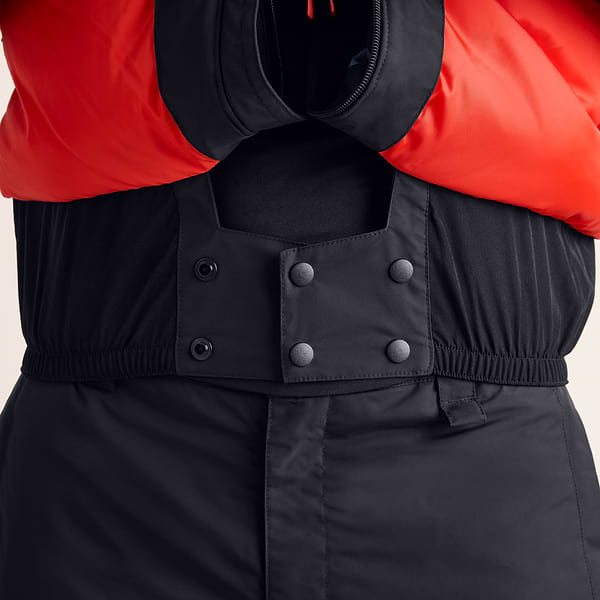
Snow skirt
You’re learning to ski, which means you’re going to sit on your backside a lot more than you’d like to admit. One second you’re on your feet, the next you’re face-first in a snow drift, or sliding awkwardly off a chairlift, and your jacket’s gone from warm and cosy to damp before you can blink.
Enter the snow skirt: a clever little band of stretchy fabric tucked inside your jacket that seals out snow before it ruins your day. Poppers or gripper elastic keep it in place, forming a barrier that keeps your base layers dry and warm.
Why it matters:
Everyone has a tumble or two while learning. A snow skirt is the difference between laughing it off and spending the rest of the run cold and damp.
Ski pass pocket
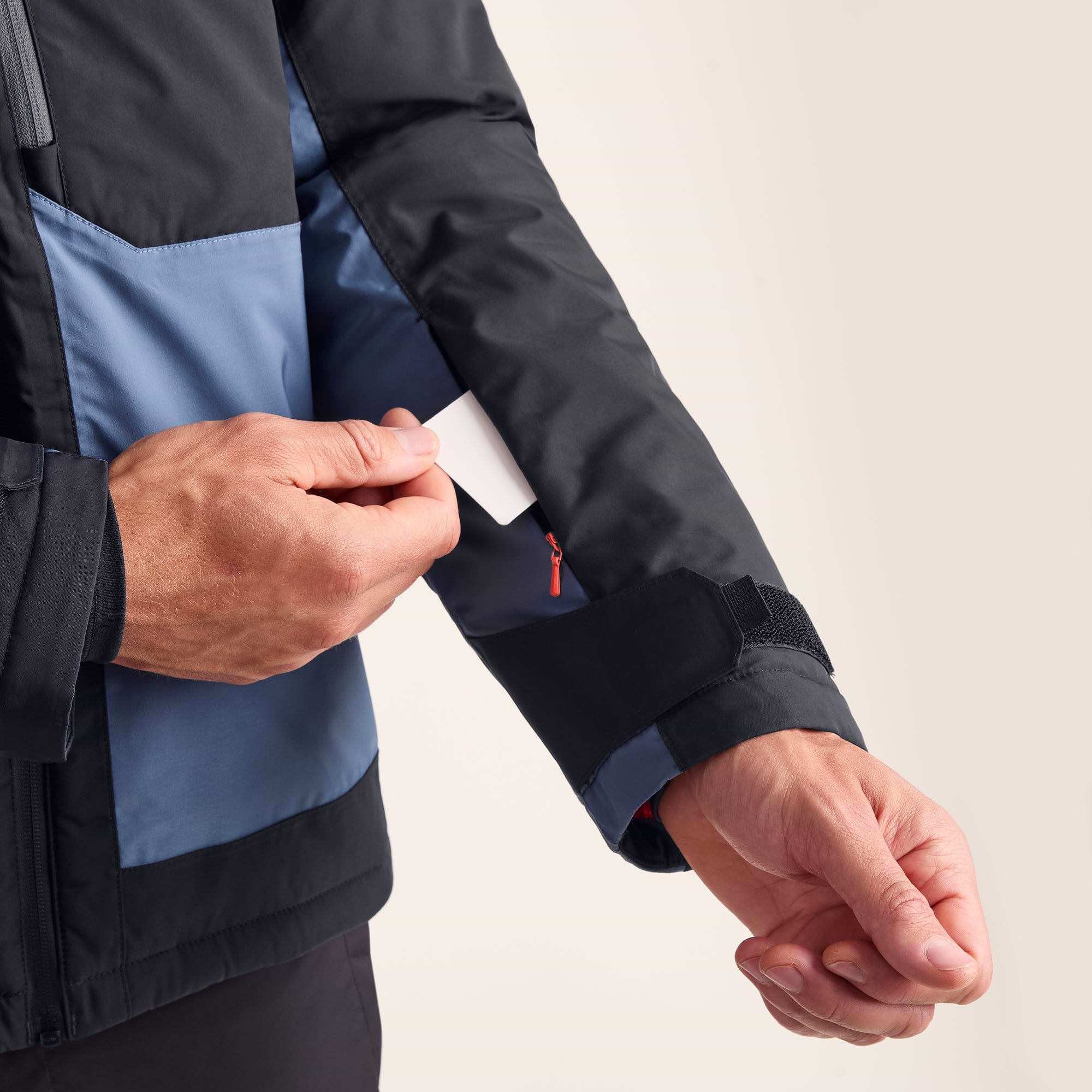
Every time you hit a lift, your pass needs scanning. Now imagine doing that with gloves on, ski poles swinging from your wrists, and a queue of impatient skiers behind you.
A ski pass pocket solves all that. It’s a clear, touch-sensitive pocket on your sleeve where your lift pass slips in once and stays put. Approach the scanner, wave your arm, and you’re through. No fumbling. No glove juggling. No holding up a line of muttering skiers.
Why it matters:
Less faff, more skiing. No more panic-digging or accidentally leaving your £200 lift pass in a mountain restaurant.
Helmet-friendly hood
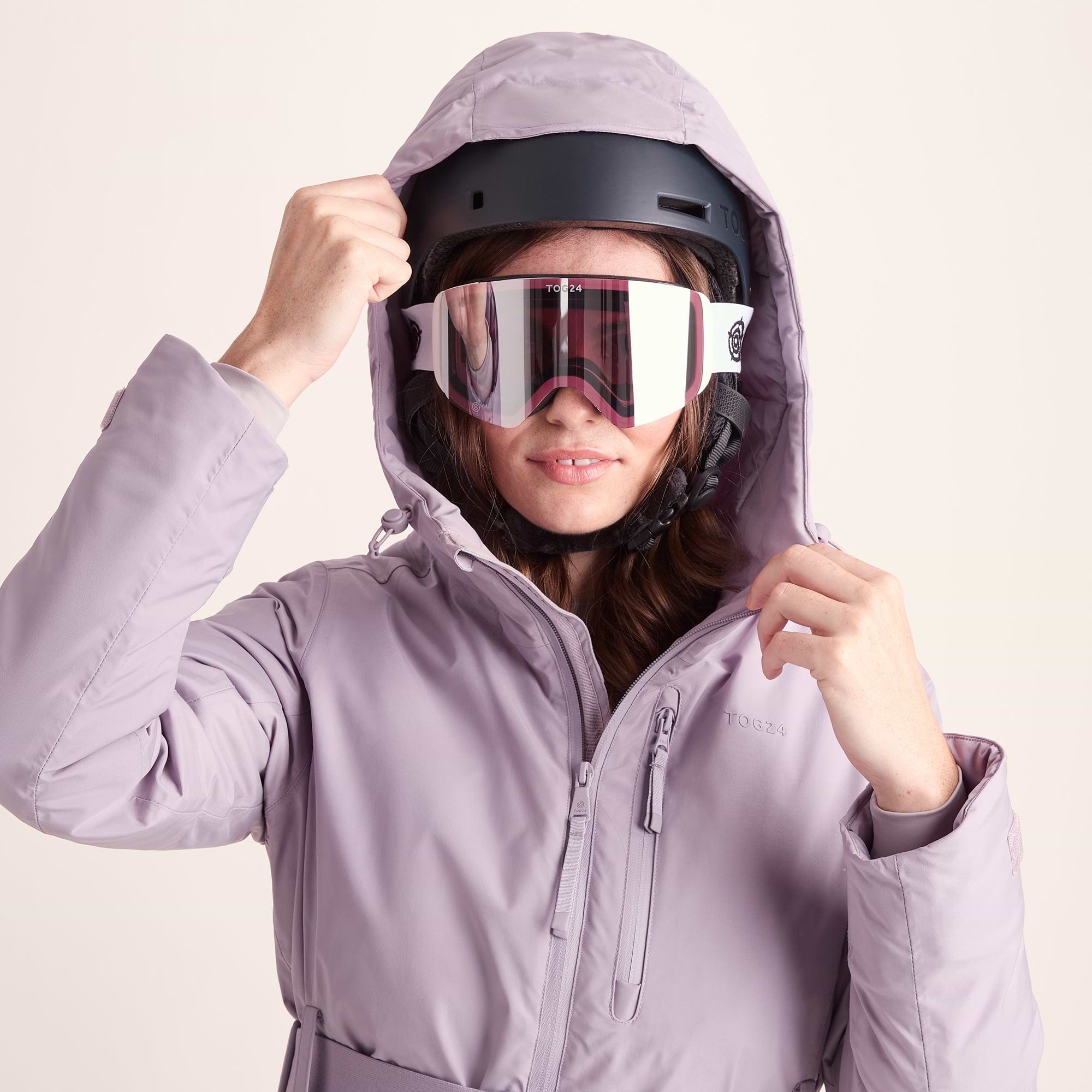
Standard jacket hoods aren't designed for skiing down a mountain at 30mph wearing a helmet. Pull a regular hood over your helmet, and you'll either look like you’re wearing a fabric balloon or you'll restrict your vision so much you can't see that skier who’s hurtling past on your left.
Helmet-friendly hoods are deeper, wider, and come with adjustable toggles so they sit neatly over your helmet without blocking your view. The best ones even have a shaped peak that extends your helmet’s visor, keeping snow and wind out while letting you see clearly.
Why it matters:
Mountain weather can change in minutes. When a sunny morning turns into a lunchtime blizzard, you want proper head coverage that keeps you dry, safe, and able to see what’s coming.
D-ring for gloves
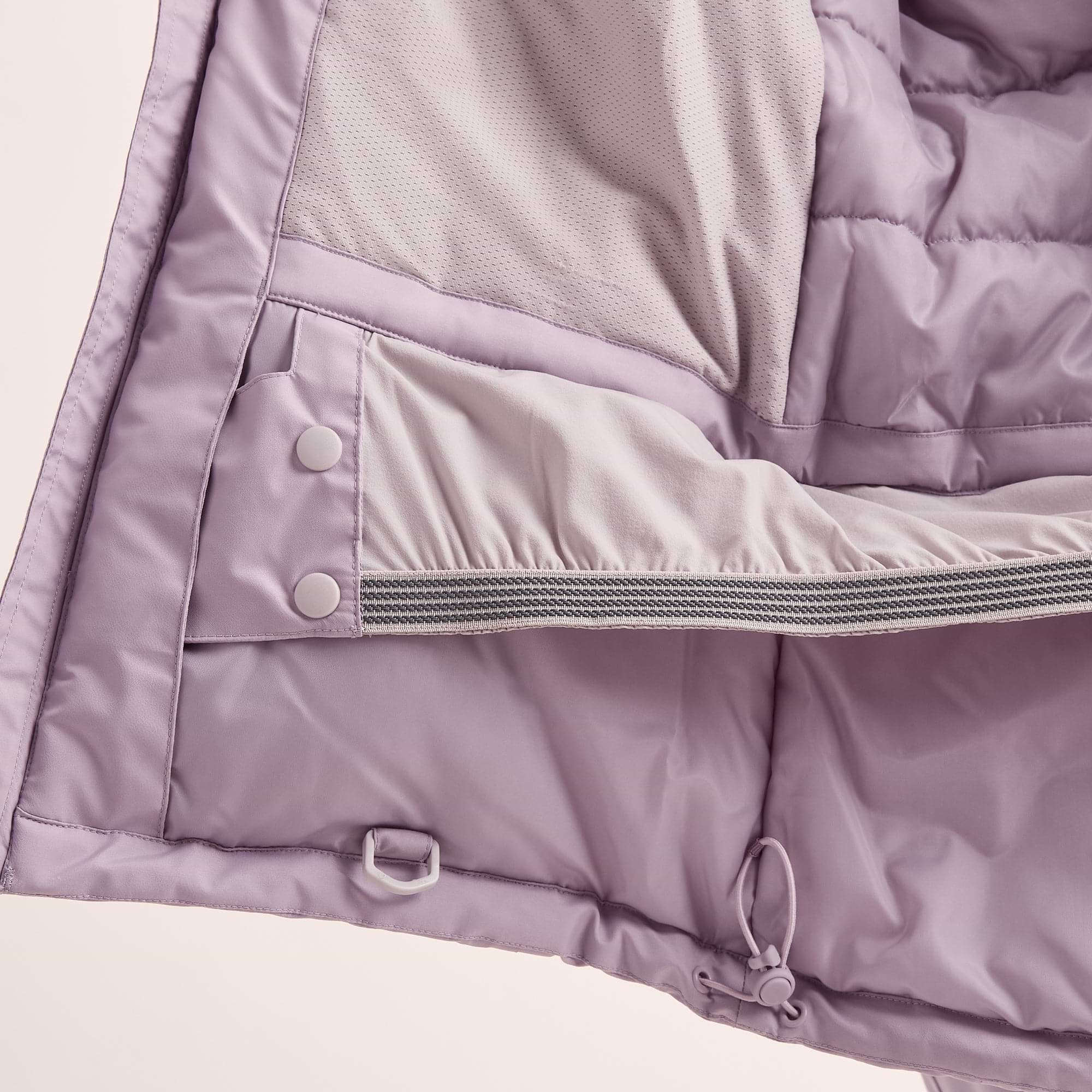
It’s lunchtime. You take your gloves off at a busy chalet cafe, set them down for a snack, and then… where did they go? One slides off the table, the other disappears under a chair. Or you stuff them in a pocket while adjusting layers, only to forget them entirely until later, soggy and cold. And don’t get us started on the panic of dropping one while juggling ski poles before a lift. Classic beginner chaos.
The D-ring fixes all of this. Clip your gloves to the loop inside your jacket or on a zip, and they stay safe, dry, and exactly where you left them. No more frantic searching, no mid-run panic.
Why it matters:
You've got enough to remember without keeping laser focus on your gloves every time you take them off. Clip them to the D-ring and forget about them!
Other features worth knowing
-
Underarm vents (pit zips): Zippered openings under your arms for instant temperature control without removing layers.
-
Multiple pockets: Chest pockets for your phone, internal pockets for valuables, inner mesh goggle pockets to keep lenses protected and easy to grab.
-
Adjustable cuffs: Velcro or snap adjustments at wrists that cinch over or under gloves, stopping snow creeping up your sleeves.
-
Snow cuffs: Soft, elasticated wrist gaiters hidden inside the sleeves that seal out snow and wind - no more icy blasts up your arms.
-
Ski-goggle wipe: A built-in cloth (usually clipped or tucked into a pocket) so you can clear fog or flakes without scratching your lenses.
Why it matters:
When you’re learning, snow finds every gap. Snow cuffs, goggle pockets, and even a built-in wipe keep your gear sorted and your hands free, so you can focus on the fun.
Pants, bibs and base layers for the bottom half
You’re all kitted out on top, jacket zipped, gloves on - but what about the lower half? Here’s what you actually need to stay dry, comfy, and ready for action.
Internal snow gaiters
Your jacket’s snow skirt keeps snow out from above, and internal snow gaiters do the same from below. These elasticated cuffs tuck over your boots, sealing the gap between trousers and footwear.
Think of them as the finishing touch to your snow shield. When you’re ploughing through powder or taking a tumble, snow loves to creep up around your boots. The gaiters (often with a stirrup that hooks under your foot) keep it all sealed tight.
Why it matters:
Nothing ruins a day on the slopes faster than wet feet and soggy socks. Internal gaiters are a simple but essential barrier that keeps your feet dry, comfy, and ready for more runs.
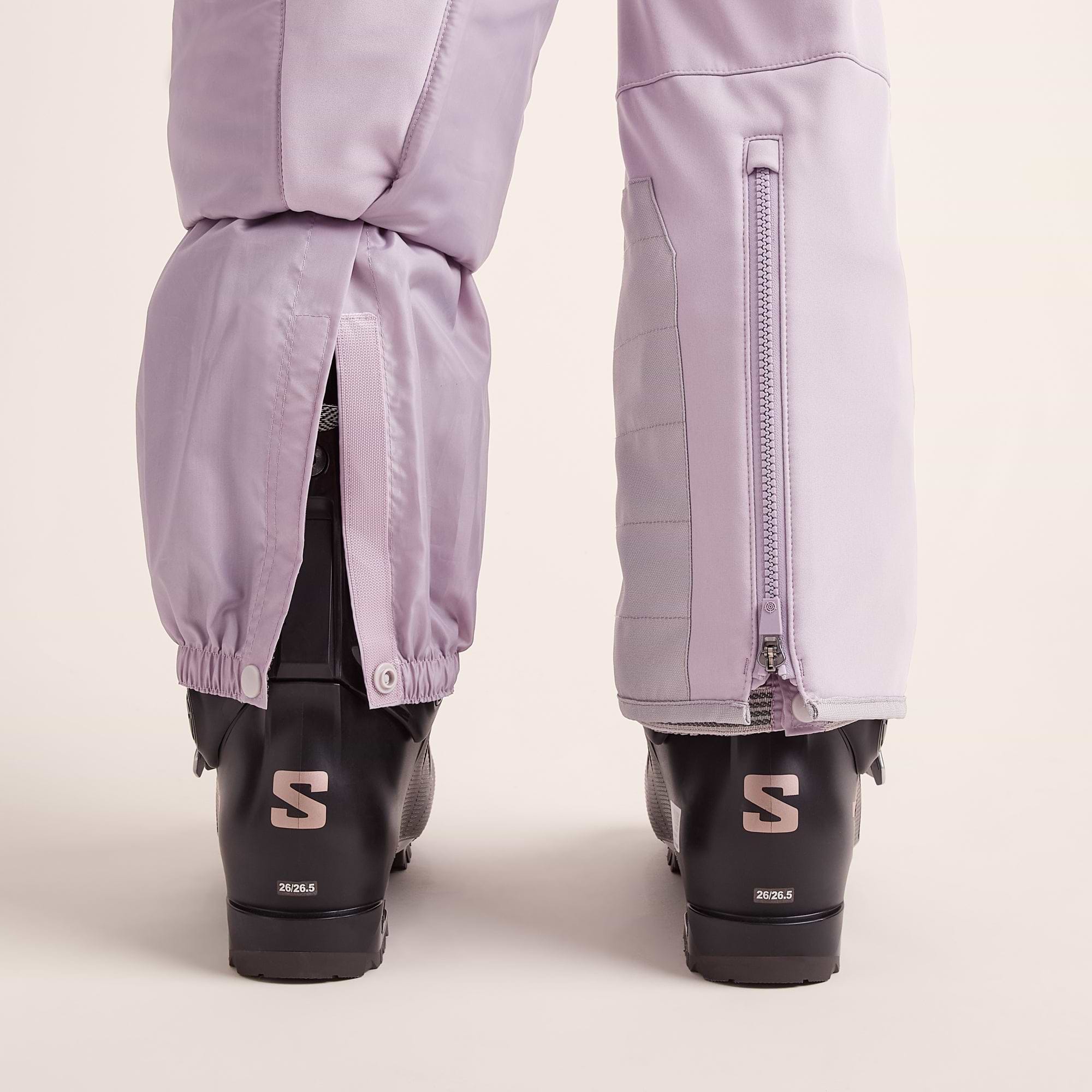
Ski pants vs bibs
Both work - it mostly comes down to personal preference. Bibs (also called salopettes) are ski trousers with shoulder straps - that’s what makes them a salopette.
Some salopettes also have a full chest/back panel, the “bib,” which keeps snow out and adds extra warmth if you take a tumble. Others just have the straps without the full bib, giving freedom of movement while still keeping your trousers in place.
Ski pants sit at the waist and are easier to get on and off, making bathroom breaks quicker. They’re usually lighter and cooler, too. How many ski trousers do you actually need? One good, waterproof pair of either will see you through a week’s trip.
Check out our men’s ski trousers and women’s ski trousers to find something warm, comfy and easy to move in.
What to wear under ski pants
Just your wicking thermal base layer. No jeans, no joggers, no extra leggings. Do ski socks go over or under thermals? Over - tuck them into your ski socks to stop snow sneaking up your legs.
Hands and feet
Cold hands or sore feet can ruin a ski day faster than a white-out. Here’s how to keep both happy.
Mittens vs gloves
Wondering what are the best ski gloves? Here’s a quick rundown of the styles available in our range:
-
Gloves give you dexterity for fiddly buckles, zips, and even checking your phone on the lift.
-
Mittens keep fingers together to trap more warmth on cold days.
-
“Lobster” styles (split between mitten and glove) are a clever compromise.
How tight should ski gloves be? Fit matters - gloves should be snug with a small air gap at your fingertips (for warmth), and no pinching at the knuckles. You should be able to flex your hand easily.
Can you wash ski gloves? Yes, you can! Just close the Velcro, use a gentle detergent, and let them air-dry. Don’t chuck them in the washing machine unless the label specifically says it’s safe - otherwise, you could ruin them.
If they’ve got a leather or waterproof outer shell, a quick re-proof will keep them ready for the next time you hit the slopes.
Ski socks
Are ski socks necessary? Absolutely - you might not think so, but you do need ski socks. Ski socks are often overlooked, but they make a huge difference to comfort. You want thin to medium, tall, moisture-wicking socks with cushioned shins to protect against boots.
The best materials for ski socks are merino wool or technical synthetic blends - they keep your feet warm, dry, and happy, no matter how long your runs are. Merino wicks moisture naturally; synthetics dry ultra-fast. Bring 4-6 pairs for a week and rotate them daily, depending on how much skiing you’re planning.
And just a quick note - we often get asked, “Can you wear hiking socks for skiing?” They’re not the best choice, as they’re usually too thick and can bunch up inside your ski boots.
Head, eyes and face
Your head’s where you lose heat the fastest, so keeping it covered makes all the difference. On the slopes, you’ll also need to guard against glare and wind - it’s not just about warmth, but visibility and comfort too.
Wear a thin beanie or balaclava under your ski helmet - anything thicker will throw off the fit. And if you’re wondering what a balaclava actually is, it’s a lightweight, stretchy hood that covers your head and neck - just the thing for those properly cold, windy, or snowy days (we’re talking minus 20°C and below).
Can you wear glasses under ski goggles? Yes - just pick up a pair of OTG (“over the glasses”) goggles and treat them with a bit of anti-fog before you hit the slopes.
Packing checklist for a week-long ski trip
Not sure what to pack for skiing? Here’s what to actually bring. Stick to the essentials - overpacking is the rookie mistake everyone makes once.
Clothing essentials
-
2-3 base layer tops
-
2 base layer bottoms
-
1-2 mid-layers (fleece or lightweight puffer)
-
1 ski jacket
-
1 pair of ski trousers or bibs
-
4-6 pairs of ski socks
-
Gloves or mittens (liners optional)
-
Goggles
-
Helmet
-
Balaclava or neck warmer
-
Evening or casual wear
Handy extras
-
Sunscreen and SPF lip balm
-
Hand warmers
-
Glove leashes or clips (that’s what the D-ring on your jacket’s for)
-
Microfibre cloth for goggles
-
Small backpack or bum bag for the slopes
-
Plug adapter and power bank
Packing tip: Roll your base layers and socks inside your helmet to save space.
Build confidence, not bulk
Remember that first question - what clothes do I need to ski? Turns out, the answer’s pretty simple: smart layers, a bit of Ski School know-how, and skiwear that’s ready for anything. Every skier starts somewhere (usually on their backside!), but with the right kit you’ll be cruising in no time.
And to anyone asking is TOG24 a good ski brand? - absolutely. Our skiwear is designed to keep you warm, dry, and comfortable on the slopes, and packed with practical features and quality materials that deliver great value for first-timers and seasoned skiers alike.
Find your fit in the TOG24 ski range and hit the slopes with confidence. Not sure where to start? Visit us in store for some expert guidance, or read the blog to sharpen your Ski School know-how.
