

Ski School Part 2 - How To Choose The Right Jacket, Layers, And Trousers For Your Holiday
TL;DR:
Choosing what to wear skiing is all about understanding how shell vs insulated jackets, waterproof ratings and breathability affect comfort on the mountain. Pick the right combination for the conditions, and your kit will work with you from first lift to last run.
Welcome back to Ski School!
In Part 1 of our skiing series, we covered the essentials - what to wear skiing and why the layering system matters. Now it’s time to look at the choices that really shape how your kit performs on the mountain.
Because once you’ve got the basics sorted, the real questions start.
-
Is 10k waterproofing enough for the Alps?
-
Should you choose a shell or an insulated jacket?
-
Why do some skiers overheat while others freeze in the same conditions?
-
And what should you wear under your ski jacket and ski pants for different temperatures?
Let’s say this from the off: This is not about buying the most expensive gear. No way. It’s actually about understanding how ski clothing works, so you can choose the right combination for your next trip - whether you’re heading out in a January deep freeze or chasing spring sunshine in March.
Let’s get into it.
Shell vs insulated jackets - which one is right for you?
When people are working out what to wear skiing, the biggest decision is usually the jacket. Should you choose an insulated ski jacket with built-in warmth, or a shell jacket that relies on layering? The right answer depends on where you're skiing, how warm you run, and how hard you push yourself on the slopes.
Shell jackets - the adaptable option
Shell jackets are all about adaptability - you build warmth underneath and adjust it as conditions change. It’s a protective barrier that blocks wind and wet while letting your body heat escape. You control the warmth by adding or removing layers (like a fleece or thermals) underneath. This makes them more adaptable across a wider temperature range.
Best for:
-
Spring skiing (March-April)
-
Late-season skiing (March-May)
-
Days with changeable weather
-
People who run warm
-
Skiers who want maximum versatility
-
Anyone wanting one jacket for ski holidays and UK wet-weather use
Ultimately, shells work brilliantly if you're the type who's constantly taking layers on and off.
Pros: Super flexible, better breathability for high-output skiing, lightweight, and packs down small.
Cons: Requires a bit more thought when layering, and multiple layers for very cold conditions mean a bulkier fit.
Insulated jackets - the grab-and-go option
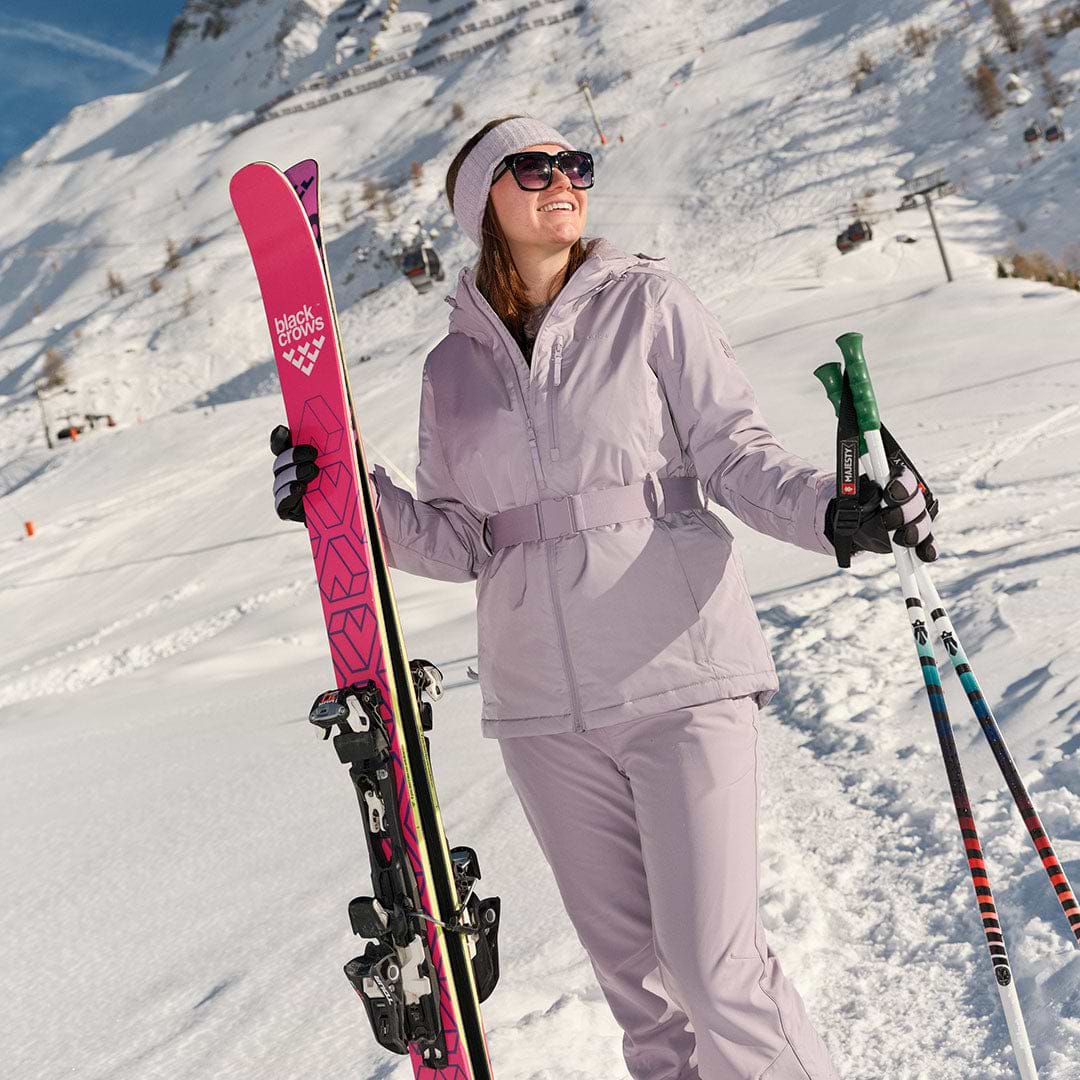
Insulated jackets have built-in padding (either down or synthetic) sandwiched between the waterproof outer shell and soft inner lining. They’re the ultimate grab-and-go option combining warmth and weather protection in a single layer - just throw on a base layer, and you're sorted.
If you’re skiing in harsher mid-winter conditions, it’s worth looking at higher-spec options in the TOG24 range - jackets like the Avoriaz and Meribel, which deliver up to 20k waterproofing and breathability for heavier snowfall. For most resort holidays, though, balanced 10k/10k styles such as the Samoëns or the Corvara give you all the protection you need while keeping things simple.
Best for:
-
Cold mid-winter trips (January-February in the Alps)
-
Anyone who gets cold quickly
-
Skiers spending lots of time on chairlifts
-
Those who want a fuss-free layering system
-
Beginners looking for simplicity and ease
-
Anyone wanting a cosy jacket that works off the slopes as well as on them
Pros: Simple and fuss-free, keeps you consistently warm, great for hanging around on lifts or lessons, and means fewer layers to pack.
Cons: Less flexible if the weather warms up, can overheat on spring days or during hard skiing, bulkier to pack, and limited options for adjusting temperature.
The verdict?
There’s one simple truth when it comes to choosing what jacket to wear skiing - neither is “better” - they just do different jobs.
Go insulated if you want warmth without any fuss, especially for mid-winter trips or if you’re someone who always feels the cold.
Pick a shell if you want a flexible option, ski in spring, run warm, or enjoy adjusting your layers as you go.
Can’t decide? Don’t worry - most experienced skiers end up with both. For your first jacket, think about when you’ll be skiing and how much you enjoy (or hate) messing about with layers. That’s the best guide to your choice.
Understanding waterproof ratings and breathability
Right, so you've decided between shell and insulated. Now let's decode the features and specs that actually matter.
Waterproof ratings explained
Waterproof ratings show how much water pressure clothing can handle before it leaks. In the lab, fabric is clamped at the bottom of a vertical tube, water is poured in, and the highest “column” it can hold gives the rating.
-
5000mm (5k): Light rain or snow - fine for short trips, but damp in heavier weather.
-
10,000mm (10k): Perfect for most resort skiing - snow, sleet, or moderate rain handled with ease.
-
15,000-20,000mm (15k-20k): Heavy-duty waterproofing for backcountry or all-day storms. Keeps you dry in brutal conditions.
Ski School tip: Even top waterproof fabric can leak at seams. Fully taped seams are best for skiing - every seam counts when you’re on the slopes.
Breathability explained
You’ll often see jackets, trousers, salopettes and bibs marked “10k/10k.” The first number = waterproofing, the second = breathability (g/m²/24hrs).
-
5000g (5k): Light activity or cold conditions.
-
10,000g (10k): All-rounder for most skiers.
-
15,000g+ (15k+): High-intensity or spring skiing.
Why it matters: skiing heats you up fast. If sweat can’t escape, it condenses inside, leaving you cold and clammy. That’s why we design our range of ski jackets to let moisture vapour escape while blocking wind, snow, and sleet, keeping you warm and dry all day.
Ski School tip: Feeling too warm on the lift? Open a collar, sleeves, or pit zips - small vents make a big difference without stopping your run.
DWR & C0
DWR (Durable Water Repellent) is a coating that makes water bead up and roll straight off your jacket. If the outer fabric gets soaked, even the best waterproof membrane struggles to breathe, leaving you damp and uncomfortable. DWR keeps the surface dry so sweat vapour can escape, keeping you warm and comfortable.
The downside? DWR wears off over time. No worries - you can refresh it with spray-on or wash-in treatments, which we’ve covered in more detail in our How to re-waterproof a waterproof jacket or coat blog.
C0 DWR is the eco-friendly upgrade. Traditional DWR used PFCs - great at repelling water but bad for the environment. Since 2025, all TOG24 DWRs are C0, meaning they’re PFC-free while still offering the same level of rain protection. Greener chemistry, same great performance.
What to wear under a ski jacket
Right, you've chosen your jacket. Now let's talk about what goes underneath.
Base layers
At this stage, it’s less about whether you need a base layer (you do - we covered that in Part 1) and more about choosing the right type for the conditions you’ll actually ski in.
Merino wool: the natural choice. Soft against the skin, temperature‑regulating, and odour‑resistant, it’s perfect for long ski days or light packing. Works across a wide range of temperatures and feels especially comfortable in cold, dry conditions.
Synthetic fabrics (polyester or blended fibres): Lightweight, tough, and quick-drying. They’re ideal if you’re skiing hard, heating up fast, or hitting the slopes in warmer spring conditions. Plus, they’re low-maintenance and generally more budget-friendly.
The real difference comes down to weight. Lightweight layers pair well with shells or milder weather, while midweight options give extra warmth under insulated jackets in January or February.
Fit is key. Your base layer should sit close to the skin without restricting movement, no sagging, no bunching, just smooth coverage that works with your mid layer rather than against it.
If you’re building your kit from scratch, explore our men’s and women’s ski baselayers - built for warmth, breathability, and long days on the slopes.
Mid layers
If your base layer keeps sweat under control, your mid layer is the one that lets you dial in warmth. It’s the layer you’ll be taking on and off as the day warms up, clouds roll in, or your legs start working harder.
Fleece: Lightweight, breathable, dries quickly, and provides excellent warmth-to-weight ratio. A zip-neck fleece is ideal because you can adjust ventilation on the fly. Midweight, like our Revive series, is the sweet spot for most skiing.
Lightweight insulated jacket: Thin synthetic or down-filled mid layers give you plenty of warmth without the bulk. They’re perfect under a shell jacket, letting you stay cosy while keeping your movement free in colder conditions.
Choosing between them often depends on your outer layer. Under an insulated ski jacket, a fleece is usually enough. Under a shell, you may prefer a lightweight insulated mid-layer for extra warmth.
If you're skiing somewhere seriously cold, you might combine both - but for most resort trips, one good mid-layer will do the job nicely.
Choosing the right ski trousers
Trousers get less attention than jackets, but they're just as important for staying comfortable all day. They take the brunt of chairlifts, powder, wind chill, and the occasional tumble - so picking the right pair can make a huge difference to how comfortable you feel all day on the slopes.
Insulated vs shell ski trousers
Just like jackets, ski trousers come in insulated and shell styles - and the right choice depends on temperature and activity level.
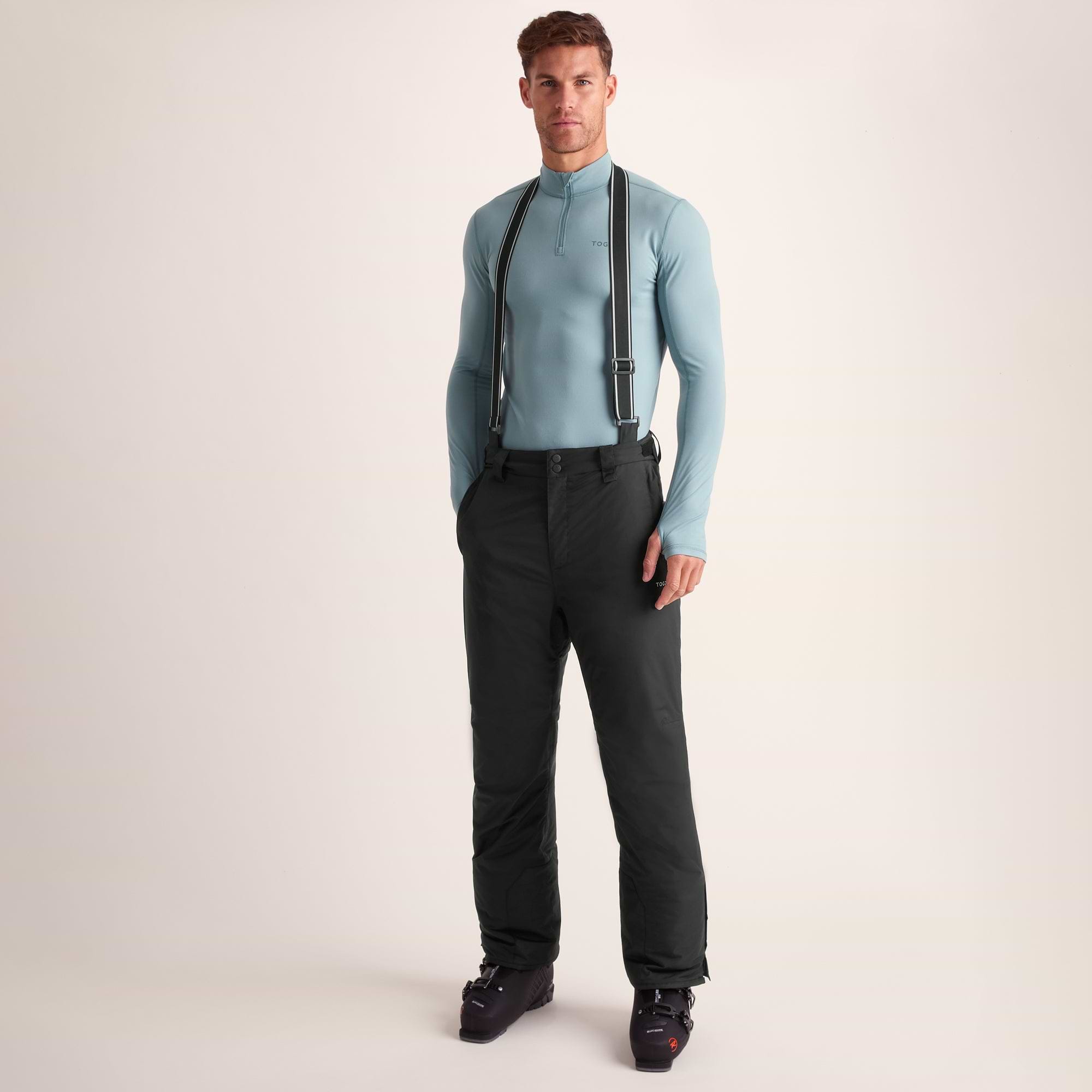
Insulated ski trousers have built-in padding, so they’re warm straight away and easy to wear. They’re a great choice for colder trips, beginners, or anyone who tends to feel the chill.
Shell trousers skip the insulation and focus purely on waterproof protection. That makes them lighter and more breathable, which can feel more comfortable if you’re skiing flat out or hitting the slopes in warmer spring conditions.
For mid-winter trips in January or February, insulated trousers are usually the easiest choice. If you like to fine-tune your warmth with layers, or you’re skiing later in the season, shell trousers give you more control and versatility.
That same balance carries through the TOG24 ski trouser range as well - from insulated salopettes such as the Clusaz and Annecy for dependable mid-winter warmth, to lighter shell styles designed for skiers who prefer to layer and adapt.
What to wear under ski pants
Keep it simple. The layer underneath your ski trousers should be a single moisture-wicking thermal base layer - nothing bulky, no jeans or joggers.
In colder weather, go for a midweight thermal to add warmth. In milder spring conditions, or if your trousers are insulated, a lightweight base layer will usually do the job. The aim is to stay warm without restricting movement or circulation inside your ski boots.
Waterproof ratings for trousers
Your ski trousers take more direct contact with snow than your jacket - from sitting on lifts, kneeling to tighten bindings, or brushing through powder. That’s why reliable waterproof protection matters just as much in your trousers as in your jacket.
And don’t forget the seams. Snow doesn’t just hit the fabric - it sneaks in through the stitching, so fully taped seams are a must.
Features that affect comfort
When choosing ski trousers, these are the details that influence warmth, movement and durability:
-
Reinforced inner hems: Protect against sharp ski edges and boot buckles - a small detail that prevents early wear in high-friction areas.
-
Articulated knees or shaping darts: Allow natural movement when bending, carving or climbing stairs in ski boots.
-
Adjustable waist or braces: Help fine-tune the fit depending on how many layers you're wearing.
-
Internal snow gaiters: Seal out snow around your boots, especially useful in softer conditions or after the inevitable tumble.
-
Ventilation zips or ankle openings (on selected styles): Help regulate temperature and make boots easier to get on and off.
You don’t need every feature imaginable - just the ones that improve durability, movement and temperature control where it counts.
How to wash your ski jacket and trousers
After a week on the slopes, your ski kit will have seen sweat, snow, and a fair bit of grime. Keeping it clean is the best way to make sure it stays waterproof, breathable, and ready for your next run.
The same rules apply for jackets, trousers, and salopettes:
-
Close all zips and fasten any Velcro.
-
Use a specialist technical detergent - skip standard washing powders.
-
Wash at 30 °C on a gentle cycle.
-
Avoid fabric softener completely.
A quick low-heat tumble (if the label says it’s okay) can help reactivate the water-repellent finish. If rain or snow stops beading on the surface, it’s time to reproof.
Ski School tip: Always wash and dry fully before storing your kit. Clean gear performs better, lasts longer, and means your next trip won’t start with any unpleasant surprises.
Ski school wrap-up
By now, you know what to wear skiing and what really makes a difference on the slopes - not just layering, but how each piece works together. The difference between a brilliant day skiing and a miserable one often comes down to the details: breathable waterproofing, the right insulation, trousers that move with you, and gear that’s built for real alpine conditions.
If you’re putting your ski kit together from scratch or upgrading your gear, check out the TOG24 men’s and women’s ski range and look for the features we’ve highlighted here. And for more tips, advice, and mountain-ready kit guides, check out our fantastic TOG blog.
Pick the right kit, look after it properly, and your ski kit won’t just survive the slopes - it’ll help you make the most of every run.
